Some chords feel impossible: fingers that will not stretch, shapes that buzz, or a chord that stops a song dead. The good news is that you rarely need the full shape.
This article shows two substitution principles and how a capo can make hard keys easy — without making the song sound wrong.
In this article
- Two principles: trim the notes, and swap the shape
- Common substitutions, and how to keep the key right
- How a capo moves the key to your voice
The idea: a chord is a set of notes, not a fixed shape

A chord is defined by its notes, not by one fingering. If you play the notes that matter, the chord is still the chord — even if you leave some out.
Most chord shapes contain notes you can drop. The root and the third define the chord. The fifth adds body but rarely changes what the chord is.
That means you can simplify almost any chord. You do not need a new chord: you need the same chord with fewer notes, or the same notes in a different place.
Principle 1: trim the notes

The first principle is simple: take away notes until the shape is easy, and keep the notes that define the chord.
Start by removing the fifth. Then, if you still need to, remove a doubled root or third. What is left should still sound like the chord, only thinner.
Check your trimmed chord by playing it with the song. If it sounds right, keep it. If it sounds empty, try keeping a different note instead.
- Remove the fifth first, then a doubled note
- Keep the root and the third — they define the chord
- Check it against the song, not in isolation
Principle 2: swap the shape
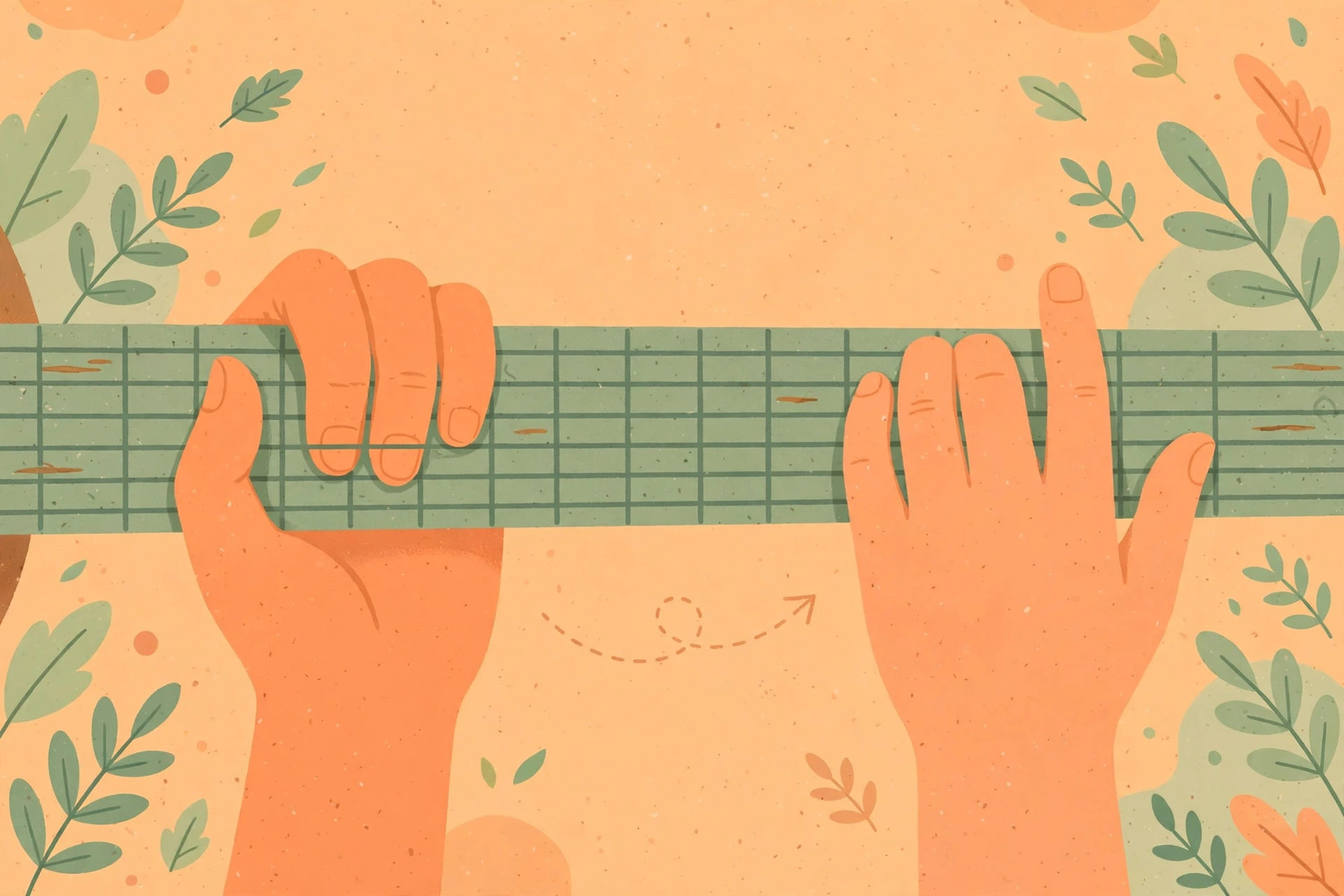
The second principle is to swap the shape: play the same chord somewhere else on the neck, in a form your fingers can manage.
A barre chord can often be replaced by a triad on three strings. It is thinner, but in a band or with a singer, the thinner sound often fits better anyway.
Open chords can be moved up the neck with a capo, or replaced by a different voicing of the same notes. The chord stays the same; only the shape changes.
Common substitutions: F, B and the chords beginners avoid
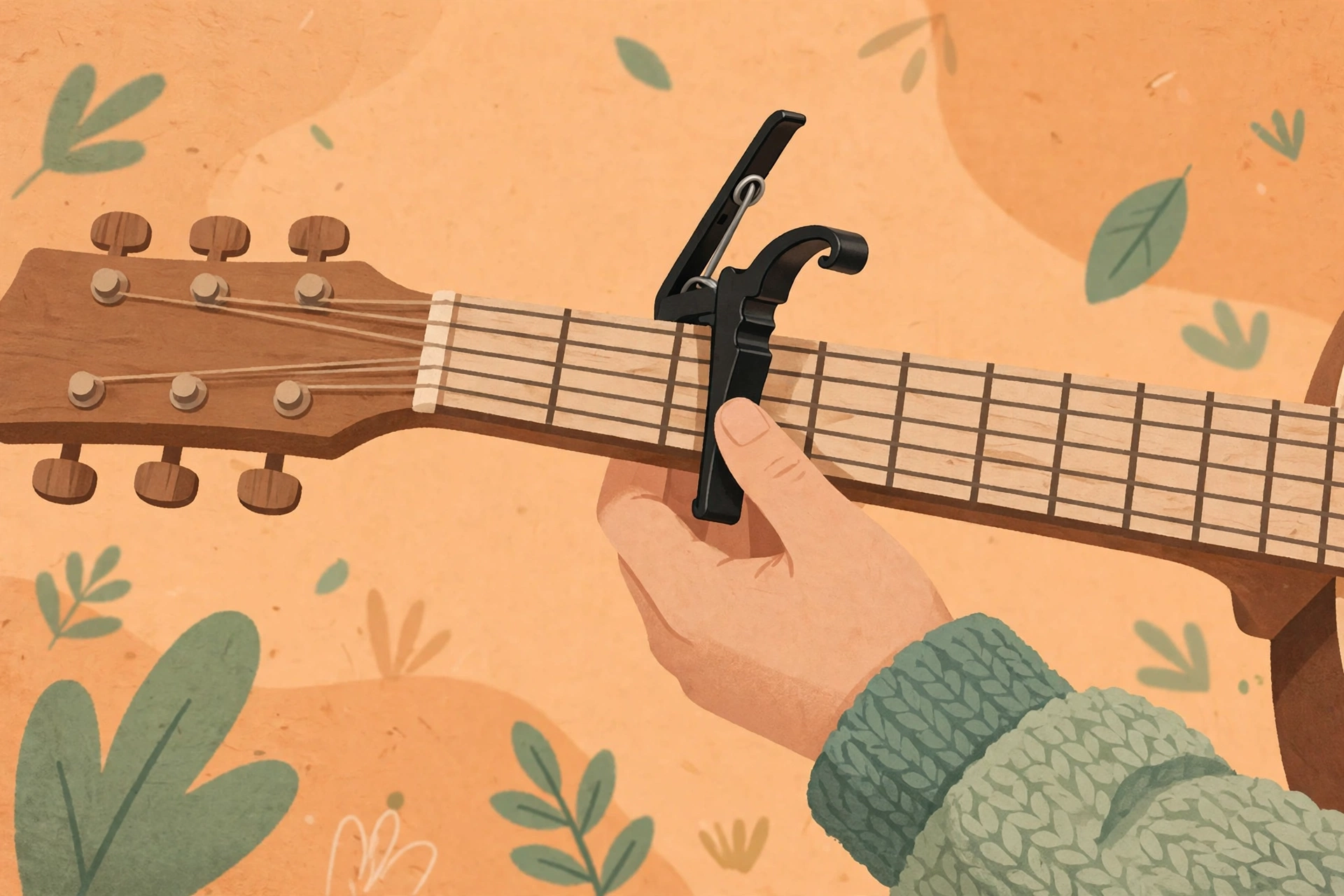
F is the classic hard chord, because the full barre shape asks a lot of a beginner's hand. A three-string F, or an F with only the top strings, is a fair swap.
B is often hard for the same reason. A smaller B shape, or a B7 that uses open strings, can carry the song while your hand catches up.
The same idea applies to any chord that stops you. Find a smaller version, use it in the song, and return to the full shape when your hand is ready.
Keep the key right: substitutions change the sound, not the key

Substitutions change the sound of a chord, not the key of the song. A trimmed F is still F, and the song stays in the same key.
Be careful with one thing: do not swap a major chord for a minor one, or the other way round. That changes the feeling of the song, not just the shape.
If a substitution sounds wrong, go back to the full chord for one bar and compare. That tells you whether the notes are wrong, or only the sound is thinner.
How to Figure Out Chords by Ear: A 4-Step Method That Starts with the Bass Line
How to Use ChordTube: The Free Tool That Shows Chords, Keys and BPM for YouTube Songs
Summary

Hard chords do not have to stop a song. Trim the notes, swap the shape, or move the key with a capo — and keep playing.
- A chord is its notes, not one fixed shape
- Trim the fifth first, keep the root and third
- Swap the shape instead of forcing a barre
- Use a capo to put the key where your voice sits
More from Kotona in English

Mystic Kotona — Fortune Readings
Free fortune readings in English, explained without fear-based selling: BaZi (Four Pillars of Destiny), palm reading and aura color. No sign-up, results in your browser.
Try a free reading
Kotona Travel Map — Japan Guides
English guides for traveling Japan: goshuin temple stamps, station stamps and onsen etiquette, with a stamp-collection map of places to visit.
Read the Japan guides
Muse Guide & Books
Get started with Muse, the AI assistant by Meta: how invites and token rewards work, step-by-step setup, and the “Muse for Beginners” Kindle book series.
See the Muse guide
Kotona Global Engineer COMING SOON
Guides for engineers worldwide: building with Dify and AWS, and an insider guide to working in Japan’s engineering industry. In preparation.
Coming soon